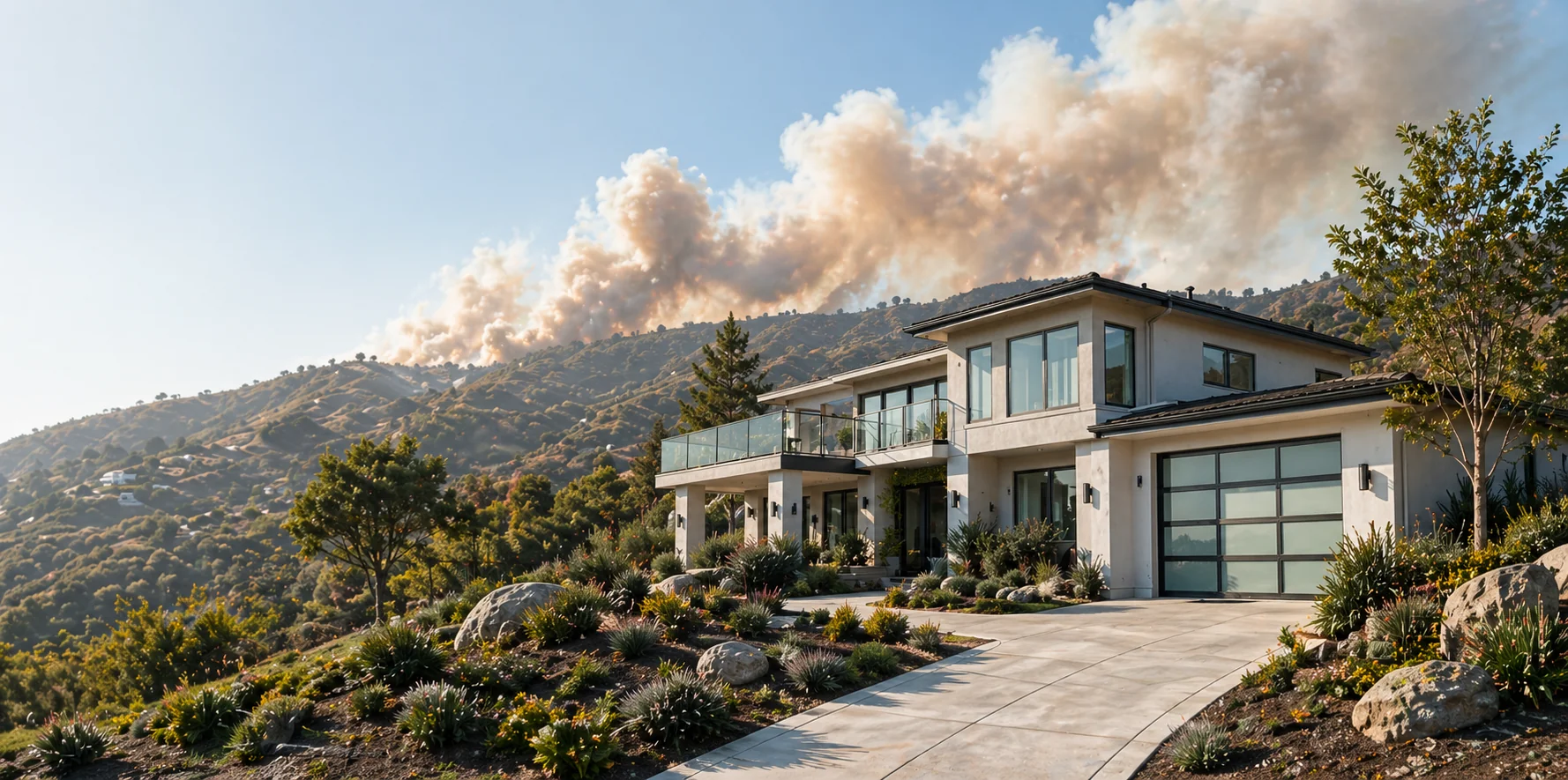
When most people picture a house burning in a wildfire, they picture big endless flames against the house, setting the structure on fire and nearly exploding as the fire line passes.
That image is 90% of the time incorrect.
The flame front, the dramatic part you see on the news, usually moves past a property in a matter of minutes. It rarely touches the house directly. What ignites the structure, almost every time, is something quieter, smaller, and far more dangerous: embers.
What an Ember Actually Is
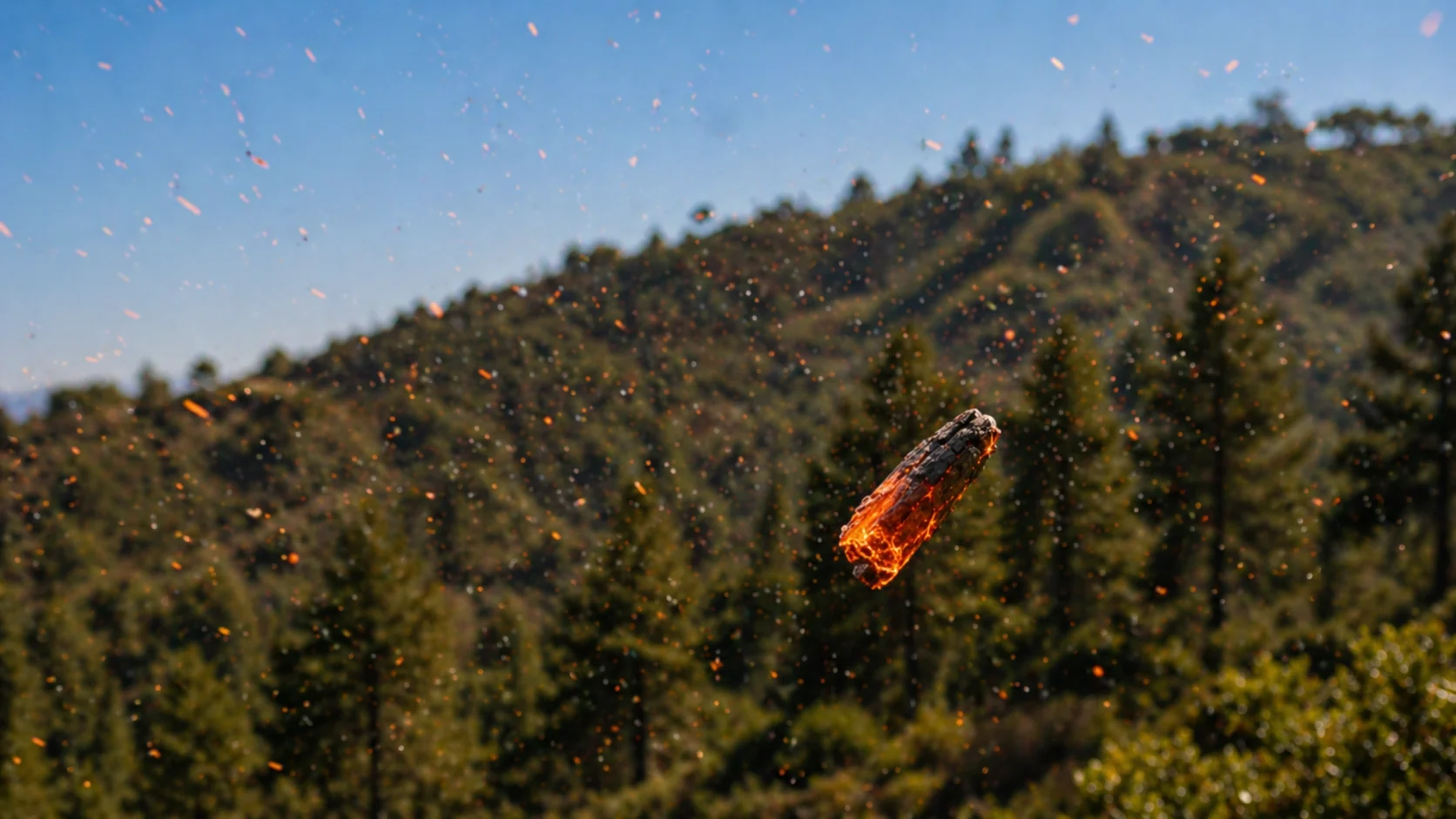
An ember is a small piece of burning material: a chunk of bark, a leaf, a fragment of a fence, ripped from the fire by superheated wind and hurled across the landscape.
Glowing red-hot against the smoke, they fall by the thousands. In a Santa Ana event they don't drift, they're launched. Sustained 50 mph winds with gusts over 80 mph drive embers more than a mile ahead of the flame front. They land hot. They land hungry.
And even the best-hardened homes have burned and embers can always find their way in.
The number that matters: CAL FIRE and post-fire forensics consistently attribute up to 90% of structure loss in wildland-urban-interface fires to ember-driven ignition, not direct flame contact.
How Embers Find a Way In
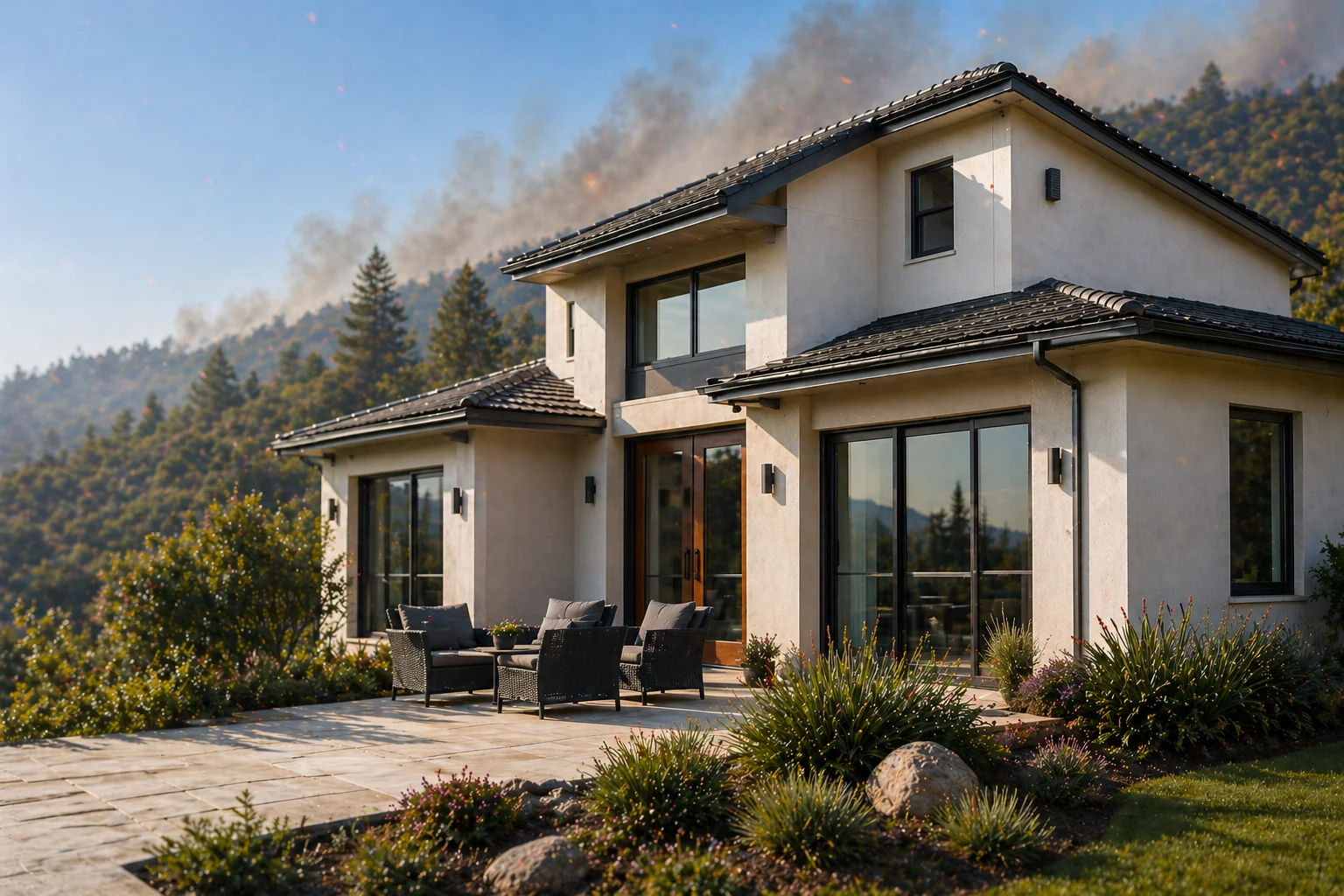
An ember on a fireproof roof doesn't do much. An ember on bare concrete does nothing. The damage comes from where embers land that can ignite. There are five common entry points, and every house has at least three of them.
1. Roof valleys and gutters
Dry leaves, pine needles, and Eucalyptus debris accumulate in gutters and roof valleys for months. An ember lands, smolders, then ignites the litter. From there, the fire creeps under the eave, into the soffit, and into the attic.
2. Vents
Standard attic, crawlspace and regular vents around the house are designed to move air. An ember the size of a thumbnail can pass through a 1/4-inch mesh and into the structure of the home. Once inside an attic full of insulation, plywood, and stored boxes, it has minutes, not hours, to start a real fire.
3. Patio furniture
Cushions ignite instantly under an ember. Synthetic fabric and foam are some of the most flammable materials on a property, and they sit out in the open. This is one of the most common oversights we see, people leave cushions, throw pillows, door mats, and other combustibles outside and forget about them entirely. Anything left outdoors can blow against the walls in a Santa Ana wind and become another ignition point.
4. Exposed wood and vegetation
Even regular wood around the house can catch fire from an ember: a deck, a railing, a fence, a door, exposed framing. Vegetation pressed against, or growing close to, the house is just as risky. Once any of it catches, the fire climbs straight into siding, eaves, and window frames.
5. Windows
Windows don't have to crack to be a problem. Even intact glass transmits radiant heat into the room, which can ignite curtains, furniture, or anything close to the window.
Before evacuating, close every window and vent in the house and pull every curtain fully open, away from the glass. Closed windows starve a potential interior fire of oxygen. Open curtains stay clear of the heat zone so they don't ignite from the heat coming through.
Why "Just Evacuate" Isn't the Whole Answer
You can do everything right, clear the gutters, replace the vents, trim the brush back 20 feet, and a single ember can still find a way in.
Evacuation saves lives, but it doesn't save structures. In a Palisades-scale event, a single engine company might be responsible for a hundred homes. Most homes are lost simply because no one was there to put out the small ember on the deck before it climbed the wall.
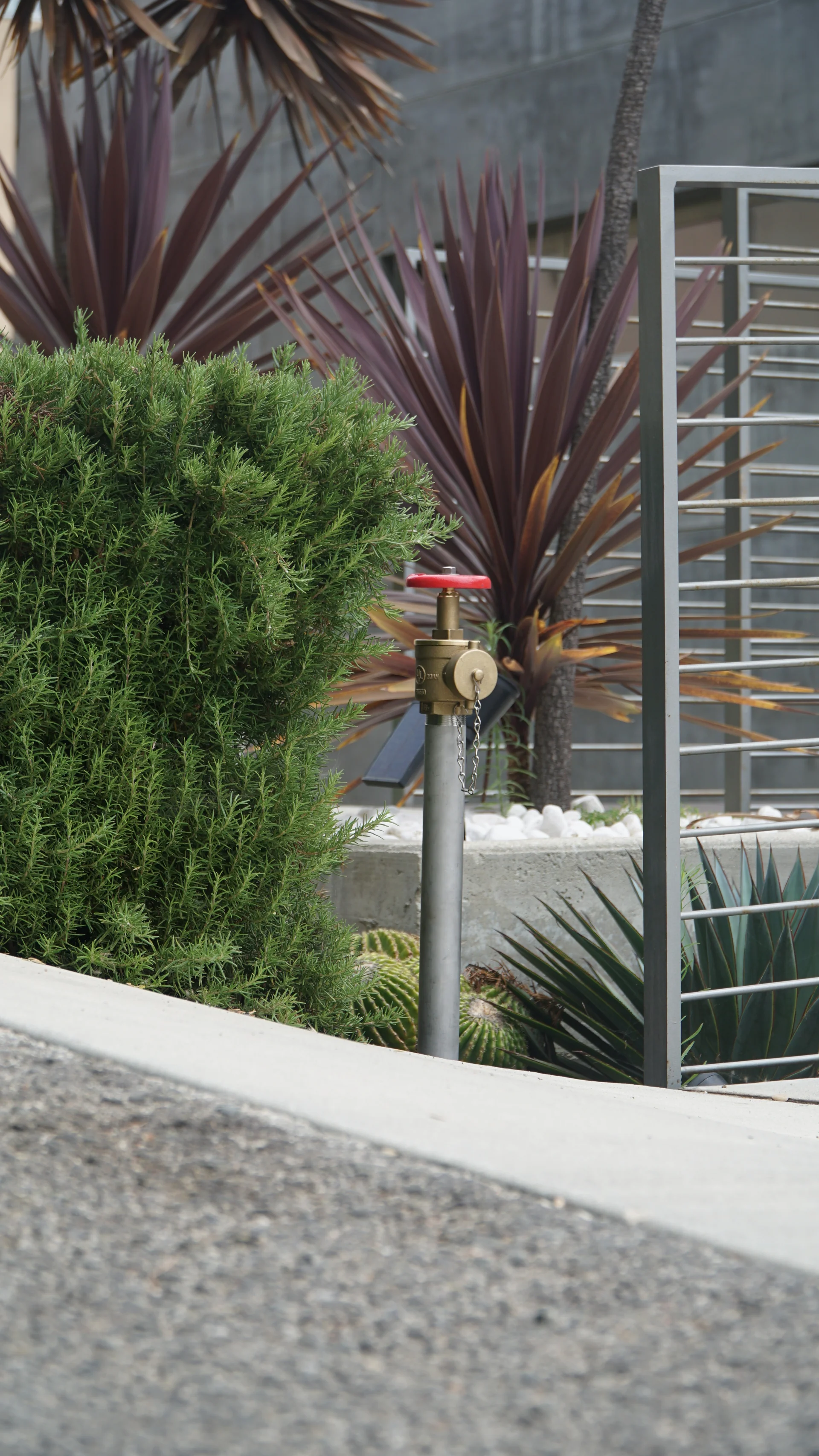
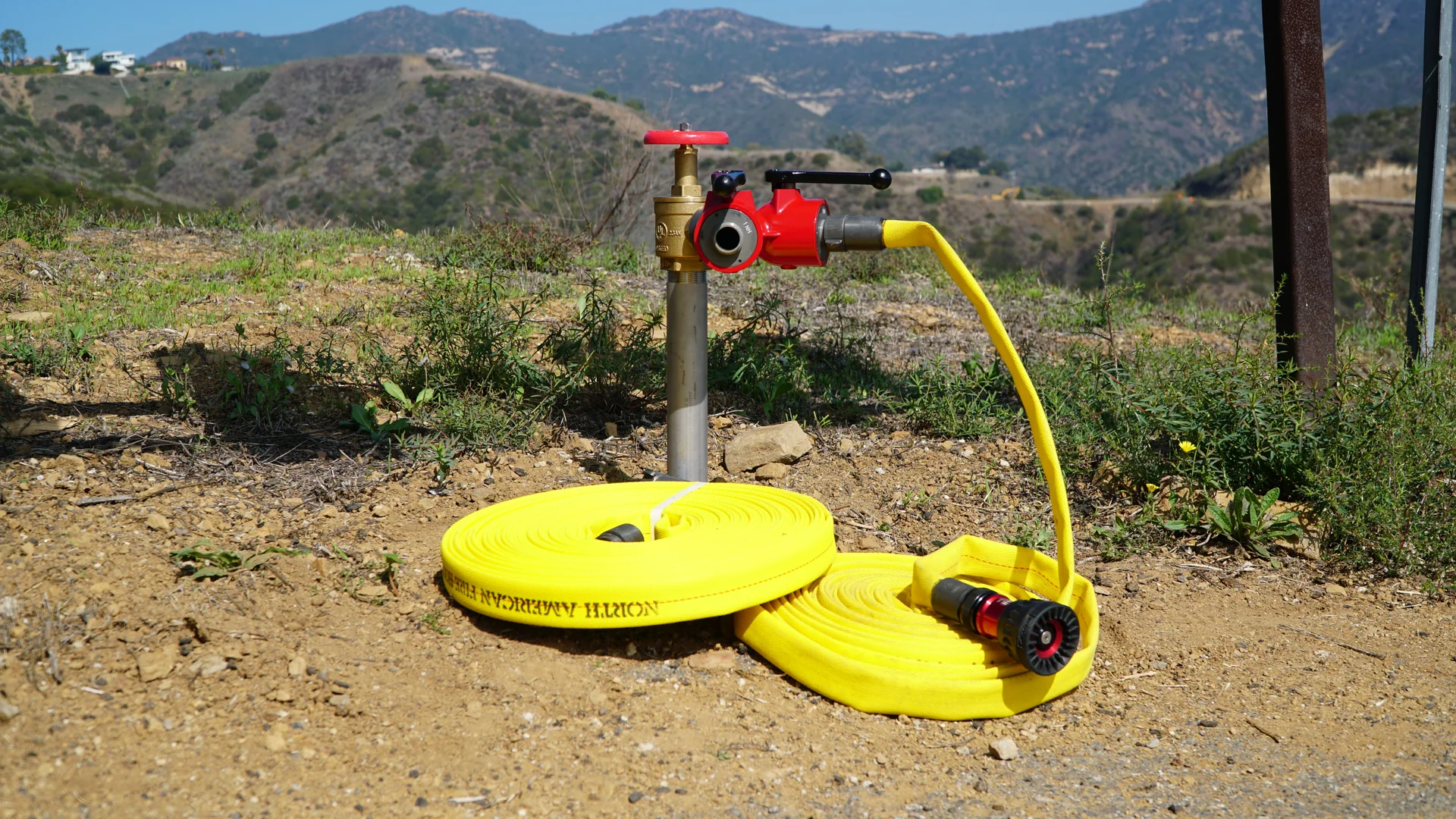
Single-outlet protection for smaller properties. Everything you need to respond quickly and protect your home from initial fire starts.
- ✓ Private Hainy Hydrant
- ✓ Single outlet
- ✓ 100ft Type-II Fire Hose
- ✓ Dual Range Nozzle (10–30 GPM)
- ✓ Hydrant Tool
- ✓ Respirator Mask & Safety Goggles Kit
Dual-outlet coverage for larger properties. Professional-grade protection on multiple sides of your home. The same equipment used by fire departments.
- ✓ Private Hainy Hydrant
- ✓ Dual Outlets, Gated Wye
- ✓ 100ft + 50ft Type-II Fire Hoses
- ✓ 2x Dual Range Nozzles (10–30 GPM)
- ✓ Respirator Mask & Safety Goggles Kit
- ✓ Hydrant Tool
The homes that survive the embers
Most homes that survive a wildfire are saved by someone on scene with private fire equipment that actually reaches the embers. Not a wall of flame. Just the small ignitions that compound, before they become structure fires.
“The Hainy Hydrant I installed provided the water needed to save my house and two of my neighbors during the Palisades Fire.”
Brent Woodworth · Chairman, LA Emergency Preparedness Foundation
Brent's home, and his two neighbors', are three of the 100+ Malibu homes a Hainy Hydrant has helped save since 2007.
See what your water can actually do.
Free property assessment. We'll test your pressure, map your structures, and show you exactly where embers are most likely to land.
Book My Free Assessment Or call: 424.425.6804