I've been a firefighter in Malibu for over 19 years. I've worked the Corral Fire, the Springs Fire, the Woolsey Fire, and the Palisades Fire. I've watched homes burn that could have easily been protected, and I've watched homes survive that nobody expected. After enough seasons, you start to see the same patterns over and over.
Here are the things I wish every homeowner in this corridor understood.
The fire trucks aren't always coming
Every major fire I've worked, the call volume exceeds the capacity. Fire departments do the best they can at the highest level, but in a major event, a single engine company might be responsible for a hundred homes spread across miles of canyons and ridges. We triage. Some homes get protected. Some don't, not because anyone gave up on them, but because there are only so many engines and so many hours in the day.
I've seen first-hand how private fire equipment can change the outcome. The smallest flames in the corner of a house in my own neighborhood turned into a full structure loss within minutes. If that home had its own equipment ready, I or any of the neighbors could have stopped it before it grew.
Plan as if no one is coming. If we do show up, that's an incredible bonus.
Your protection shouldn't depend on the public network
A Hainy Hydrant runs on your home's water main, and for the rare case where municipal pressure drops, we built a backup that keeps your hydrants and outlets working no matter what. Fire departments and water utilities fight hard to keep the network running, because the same lines that feed your home also feed the hydrants we need, so we are on the same side and a full loss of supply is rare.
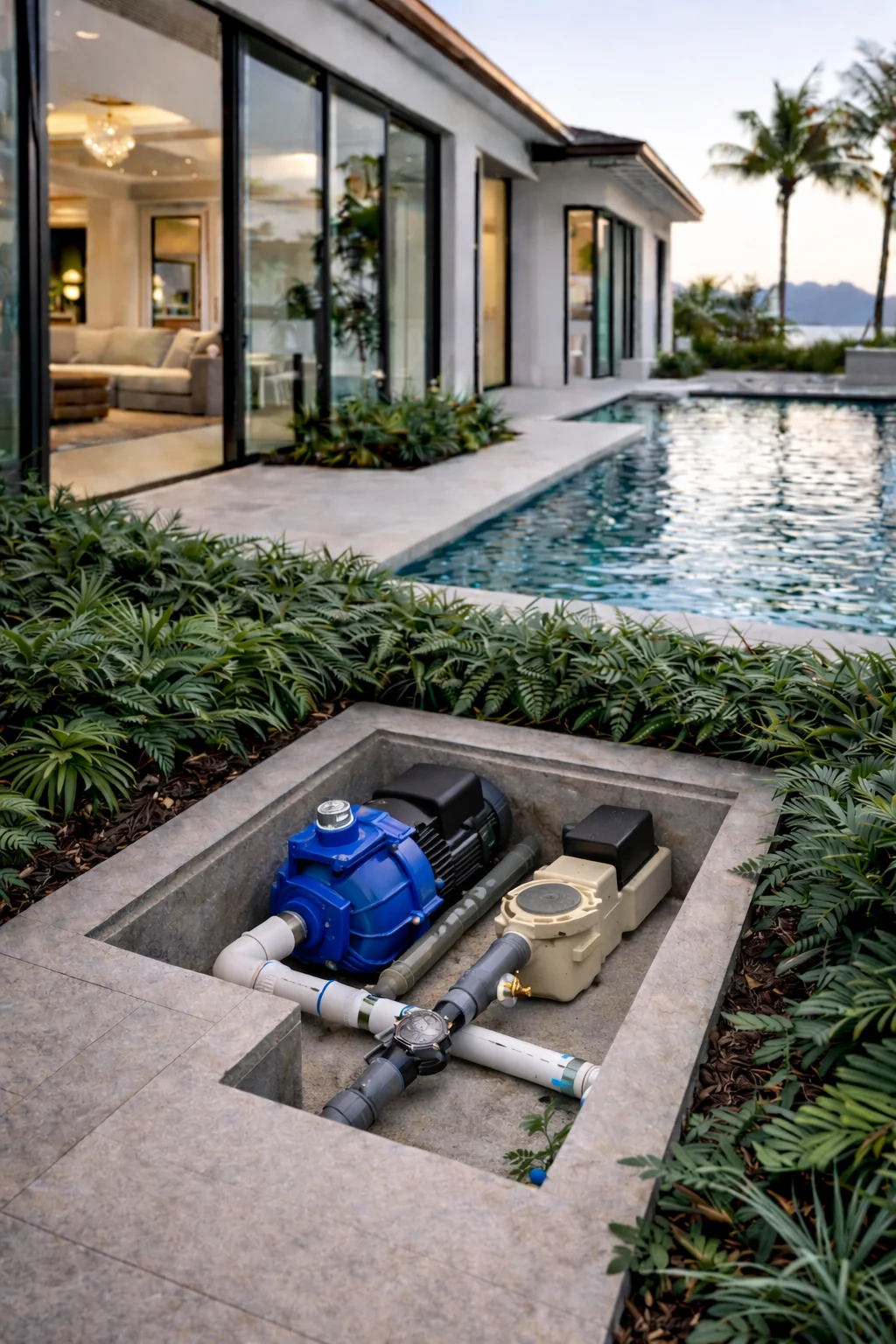
But you should not have to count on it. That's why the pool pump system draws straight from your pool, independent of the network:
Electric Pool Pump System
Compact electric pump. Plugs into your pool system. Thousands of gallons, ready to fight fire.
The homes that make it almost always had someone there
The single biggest variable in whether a home survives a major wildfire isn't the roof material, the defensible space, or the insurance policy. It's whether someone is on the property in the first hour to put out the small ignitions that always happen during ember-fall. The homeowner who chose to stay. The neighbor who didn't evacuate. The first responder who arrived in time. The handyman.
I'm not telling anyone to stay behind, that's a personal decision and evacuation saves lives. I'm telling you that the homes that survive almost always had a person and the right water at the right time.
Speed and reach beat foam and apps
Fire defense companies will sell you a lot of technology: rooftop sprinklers, fire-tracking software, biodegradable foam, automatic activation systems. Some of it is useful, but often very expensive, uses essential resources, and still isn't foolproof.
What actually puts out a small fire on a deck or in a gutter is a stream of water, fast, with reach, under real pressure. The tools we use on the engines are simple for a reason: hose, nozzle, valve. Decades of fire-line experience have settled on what works. Anything beyond that is marketing.
Insurance is a recovery tool, not a defense tool
Insurance hopefully pays out after your house burns down. It doesn't help your house not burn down, and the process most likely takes years. Premiums in this market are now high enough that a single year's bill costs more than installing real fire-defense equipment on the property.
The work is unglamorous
I've been to a lot of houses that survived. They aren't the ones with the smartest tech. They're the ones that did the basic work: cleared the gutters in October, kept the brush back from the walls, brought the cushions inside on red-flag days, and had a real way to put water on the property when the embers started landing.
And a lot of those homes had a Hainy Hydrant. Neighbors stayed, friends came over, the system passed from hand to hand defending one house and then the next. It's a proven concept. That's actually why we're here. The whole thing started because I wanted my neighbors' houses to still be there the next morning.
The pattern is repeatable. The pattern is unglamorous. And the pattern works.
Common Questions
Will the fire department always come to my home during a wildfire?
Not always. In a major wildfire, call volume exceeds capacity, so a single engine company may be responsible for dozens of homes across miles of canyon. The homes that survive usually had their own water and someone on scene. Plan as if no engine is coming, and treat it as a bonus if one arrives.
What is the single biggest factor in whether a home survives a wildfire?
Whether someone is on the property in the first hour to put out the small ember ignitions, with the right water and equipment ready. It matters more than roof material, defensible space, or an insurance policy.
Does a Hainy Hydrant work if the public water network loses pressure?
The hydrant runs on your home's water main. For the rare case where municipal pressure drops, the pool pump system keeps your hydrants working by drawing water straight from your pool, independent of the network.
Is insurance enough to protect my home from wildfire?
Insurance is a recovery tool, not a defense tool. It may pay out years after a loss, but it does nothing to keep your home from burning. In this market, a single year's premium can cost more than installing real fire-defense equipment.
Do I need expensive technology like foam or automatic sprinklers?
No. What puts out a small fire on a deck or in a gutter is a fast, high-pressure stream of water with reach. The proven tools are simple: a hose, a nozzle, a valve, and a private hydrant connected to your water main.

Single-outlet protection for smaller properties. Everything you need to respond quickly and protect your home from initial fire starts.
- ✓ Private Hainy Hydrant
- ✓ Single outlet
- ✓ 100ft Type-II Fire Hose
- ✓ Dual Range Nozzle (10-30 GPM)
- ✓ Hydrant Tool
- ✓ Respirator Mask & Safety Goggles Kit
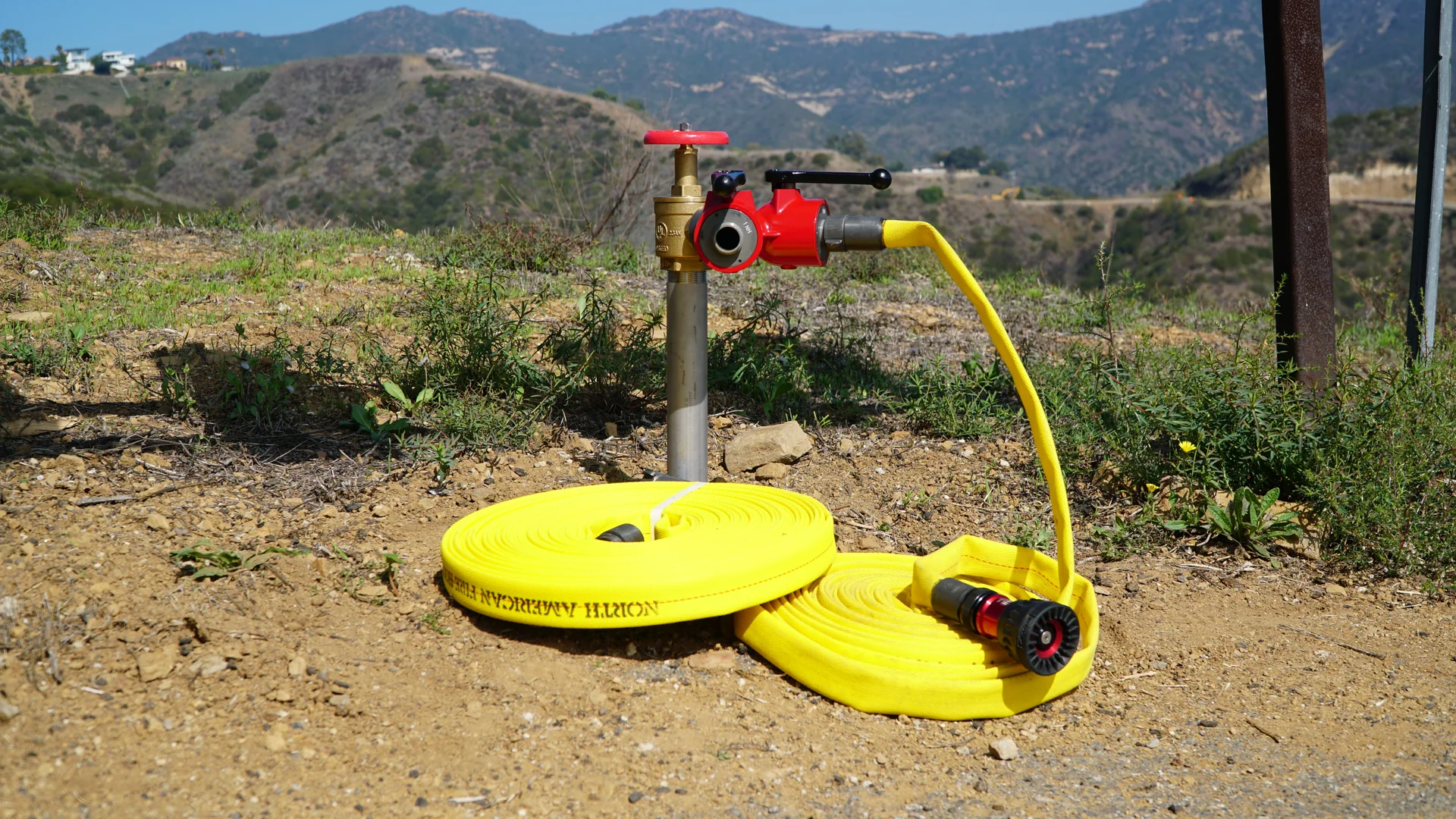
Dual-outlet coverage for larger properties. Professional-grade protection on multiple sides of your home. The same equipment used by fire departments.
- ✓ Private Hainy Hydrant
- ✓ Dual Outlets, Gated Wye
- ✓ 100ft + 50ft Type-II Fire Hoses
- ✓ 2x Dual Range Nozzles (10-30 GPM)
- ✓ Respirator Mask & Safety Goggles Kit
- ✓ Hydrant Tool
What we built
We built Hainy Hydrant because everything above adds up to one conclusion: every home in a fire-prone area should have professional-grade water access on the property.
Learn more during our free property walk-through.
I come out personally, walk your property, test your water, and tell you what I'd do if it were my house. No obligation.
Book My Free Assessment Or call: 424.425.6804